
The complete guide
How to Choose a Locking Cash Box for Everyday Takings
Loose coins, folded notes, and receipts can turn a simple cash payment into a slow search. That is awkward at a busy stall and just as frustrating when you count office petty cash at the end of the week. A set place for each item makes the job easier to follow.
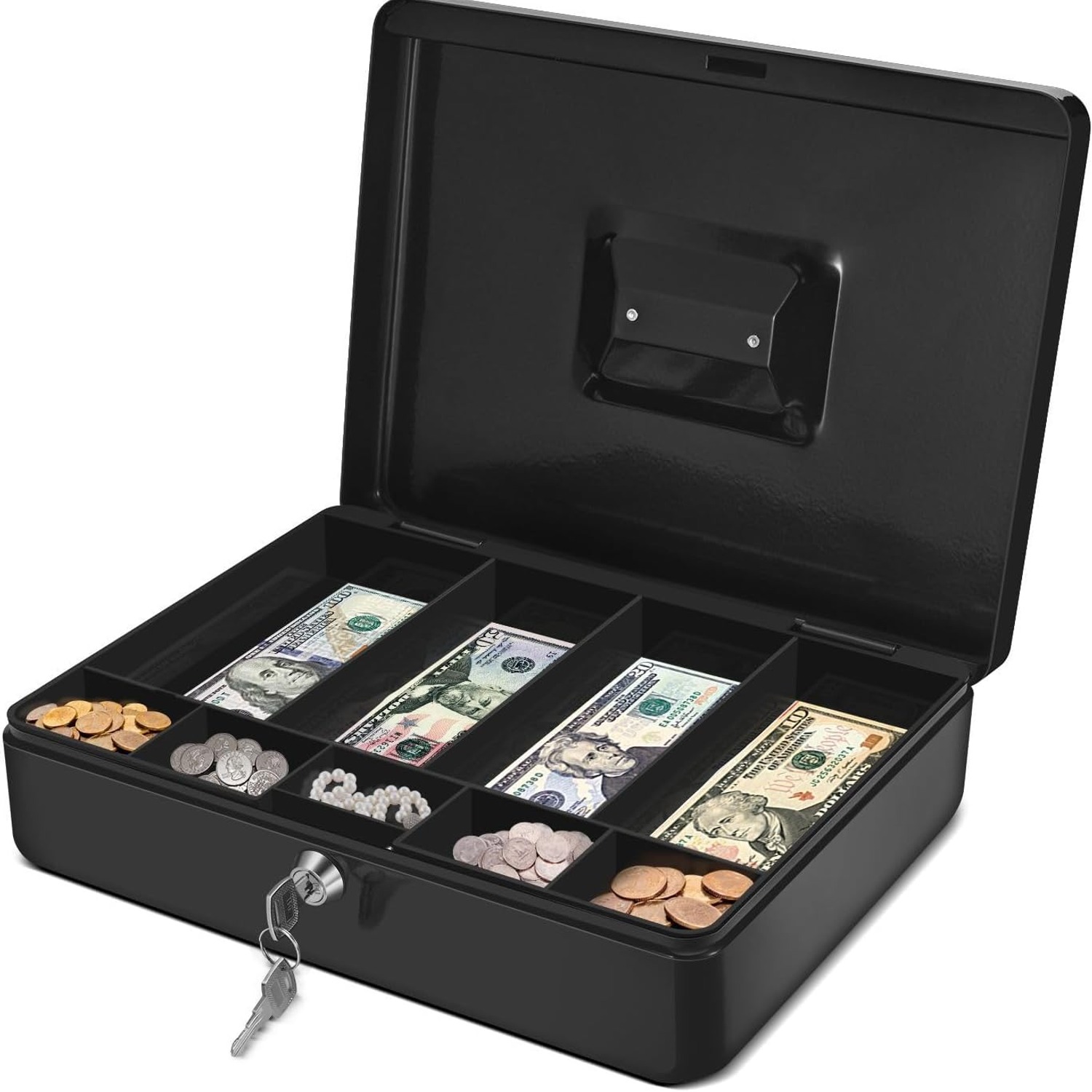
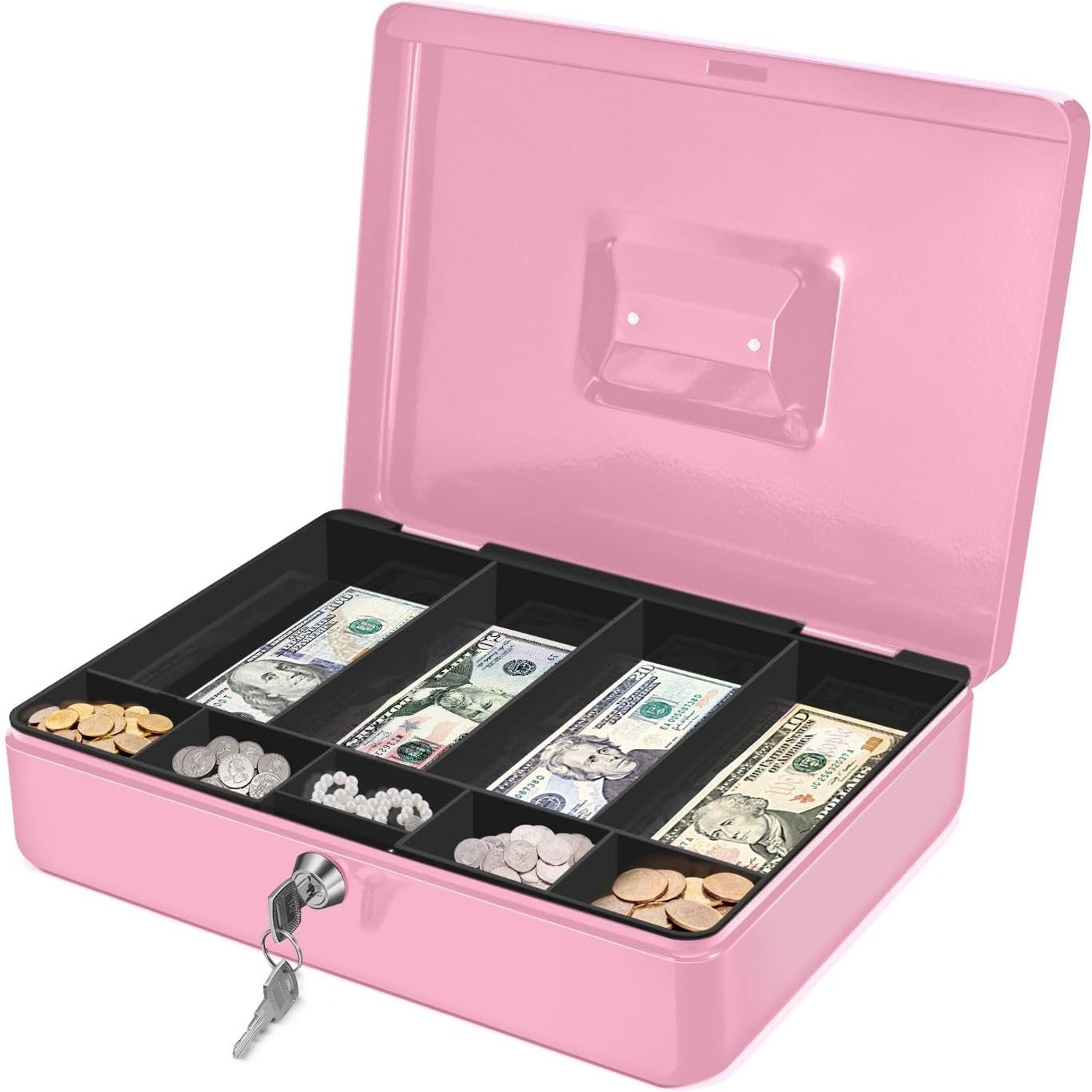
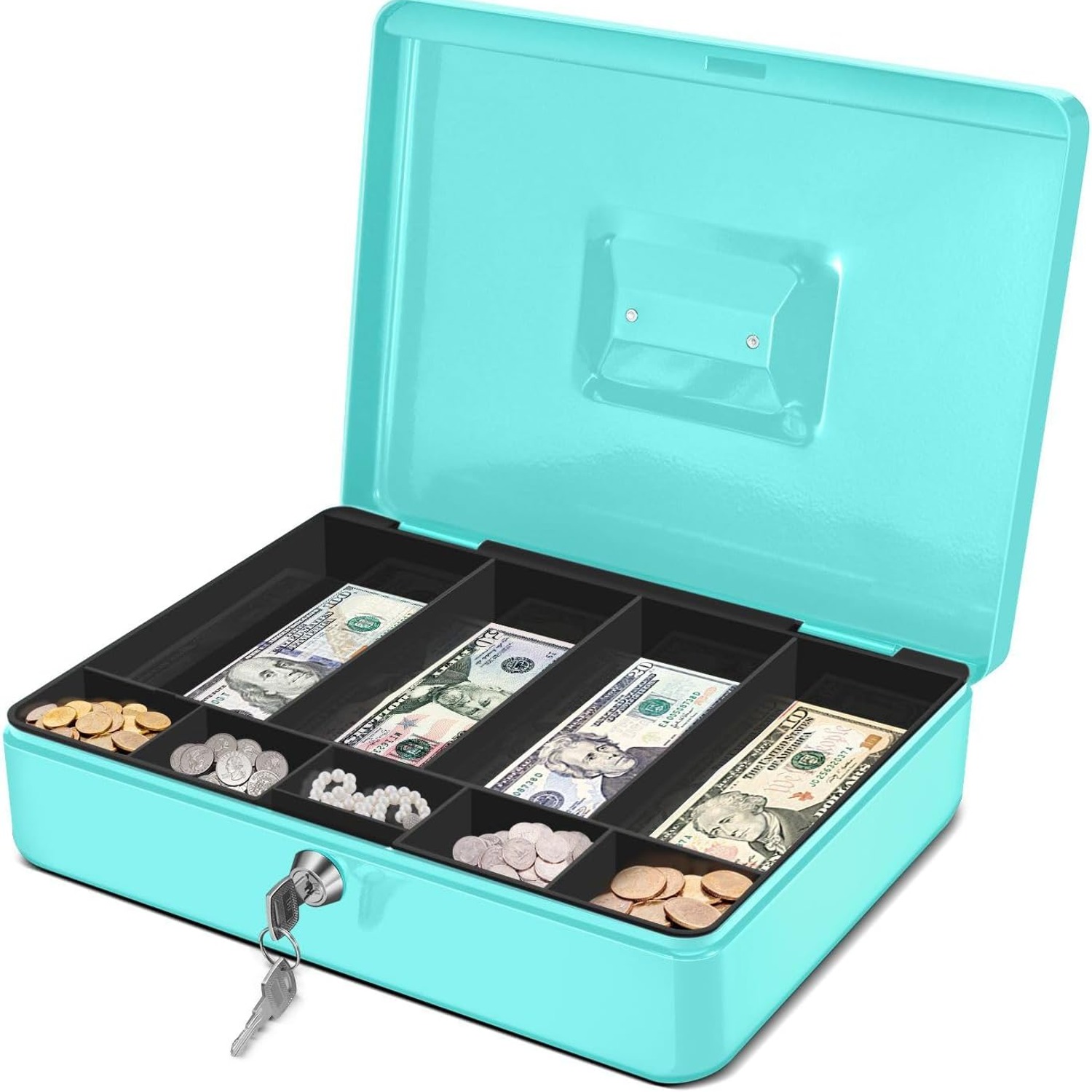
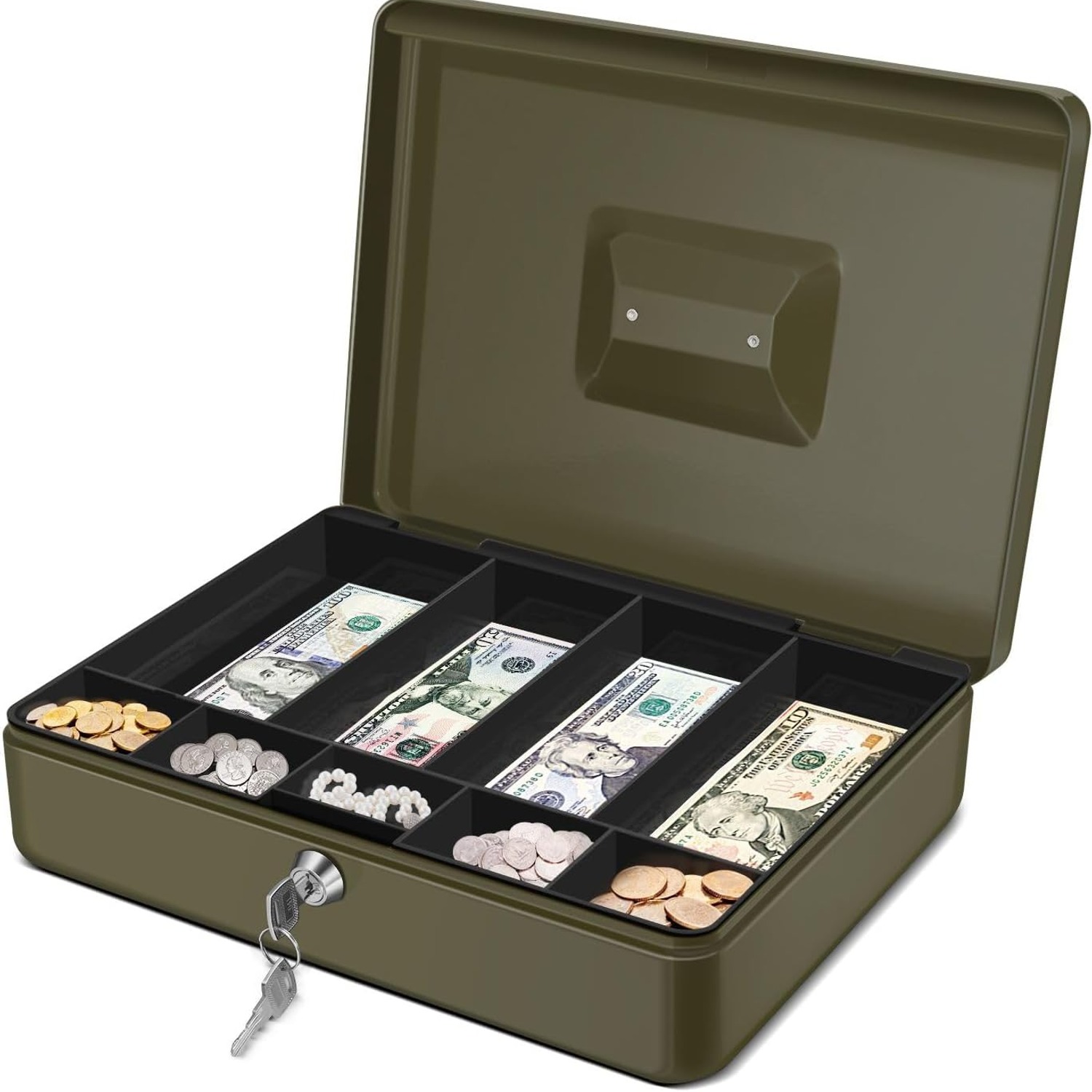
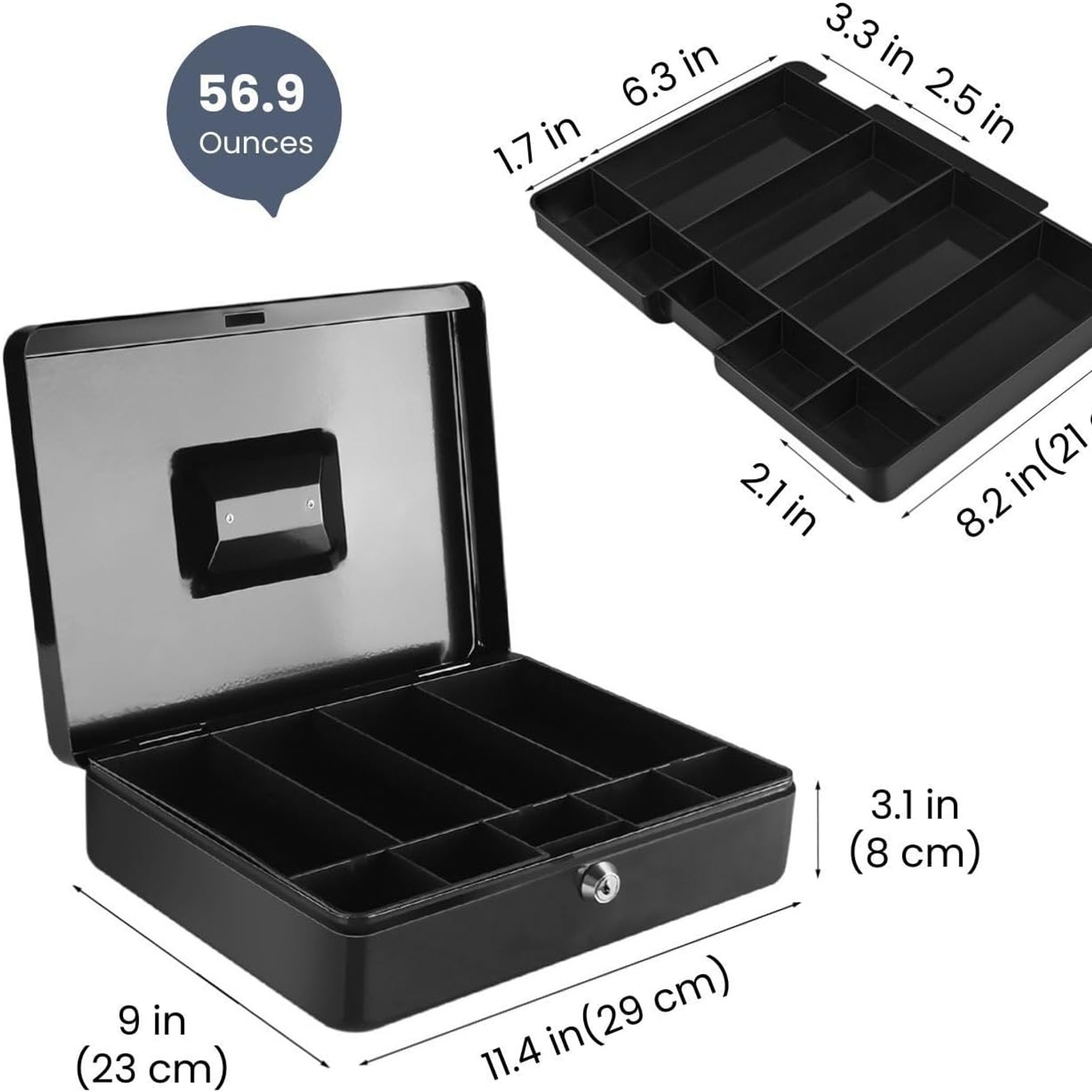
This locking cash box offers a nine-compartment layout and a folding carry handle. It is intended to keep everyday cash handling organised, with a key listed among the included components. Before buying, it helps to look beyond the word “locking” and check the size, layout, and limits of the box.
Start with the job you need it to do
Think about where money changes hands in your day. A small stall may need quick access to change. An office may need a place to keep a working float and supporting receipts. An event team may need a box that can move from a payment table to a counting area.
These jobs share a need for order, but they do not all need the same setup. A coin-heavy float puts more demand on carrying weight. A business that takes mostly notes may care more about the space available for paper money.
Write down what you expect to keep inside before comparing boxes. Include checks, receipts, and any other items that tend to collect beside the till.
How the compartment layout helps
The description identifies nine compartments for sorting money and other small items. Giving each section a fixed role can reduce rummaging and make a final count easier to check. The value comes from having a layout that everyone uses in the same way.
For example, you might separate frequently used coins from less common ones and keep checks away from loose change. The exact arrangement should follow your transactions rather than an imagined perfect system.
Individual compartment sizes are not specified. Neither is tray removability. If your routine depends on lifting out a tray or fitting a particular document flat, confirm those details before ordering a cash box with tray.
Check the measurements against your space
The maker details list overall dimensions of 22.9 × 30.5 × 7.6 cm in depth, width, and height order. These are useful starting measurements for checking a counter, shelf, or drawer.
Measure the space you can actually use, not just the outside of the furniture. Drawer runners, a narrow opening, or items stored nearby can reduce the room available. Leave clearance to reach the handle and open the lid.
A paper outline of the footprint can help you picture the box on a crowded table. It also shows how much room remains for a card reader, a receipt pad, or goods waiting to be packed. Overall dimensions do not tell you the usable size of each compartment.
Understand the lock information before buying
The product description refers to a money box with key, and a key is listed as an included component. However, a separate maker specification calls the lock a combination lock. Those details do not fully agree.
If the lock type is central to your choice, get confirmation before ordering. Do not assume the box has both types of lock or that a particular key arrangement will be supplied. The number of keys is also not stated.
This is especially worth checking for shared use. A single person running a stall has different access needs from an office where several people handle petty cash. Decide who will hold the key and what should happen when that person is away.
Match security expectations to the product
A lockable money box can support a clear cash-handling routine, but the presence of a lock does not establish a tested level of protection. No burglary rating, fire rating, or insurance approval is specified for this product.
The box is portable. That is useful when you need to move it, but it also means you should not treat it as fixed secure storage. Keep it supervised during use and decide in advance where the money will go afterwards.
If you need overnight storage for substantial takings, check the requirements of your business and insurer. Choose storage with documented protection suited to that task. An everyday cash organiser and a rated safe serve different purposes.
Who this portable cash box may suit
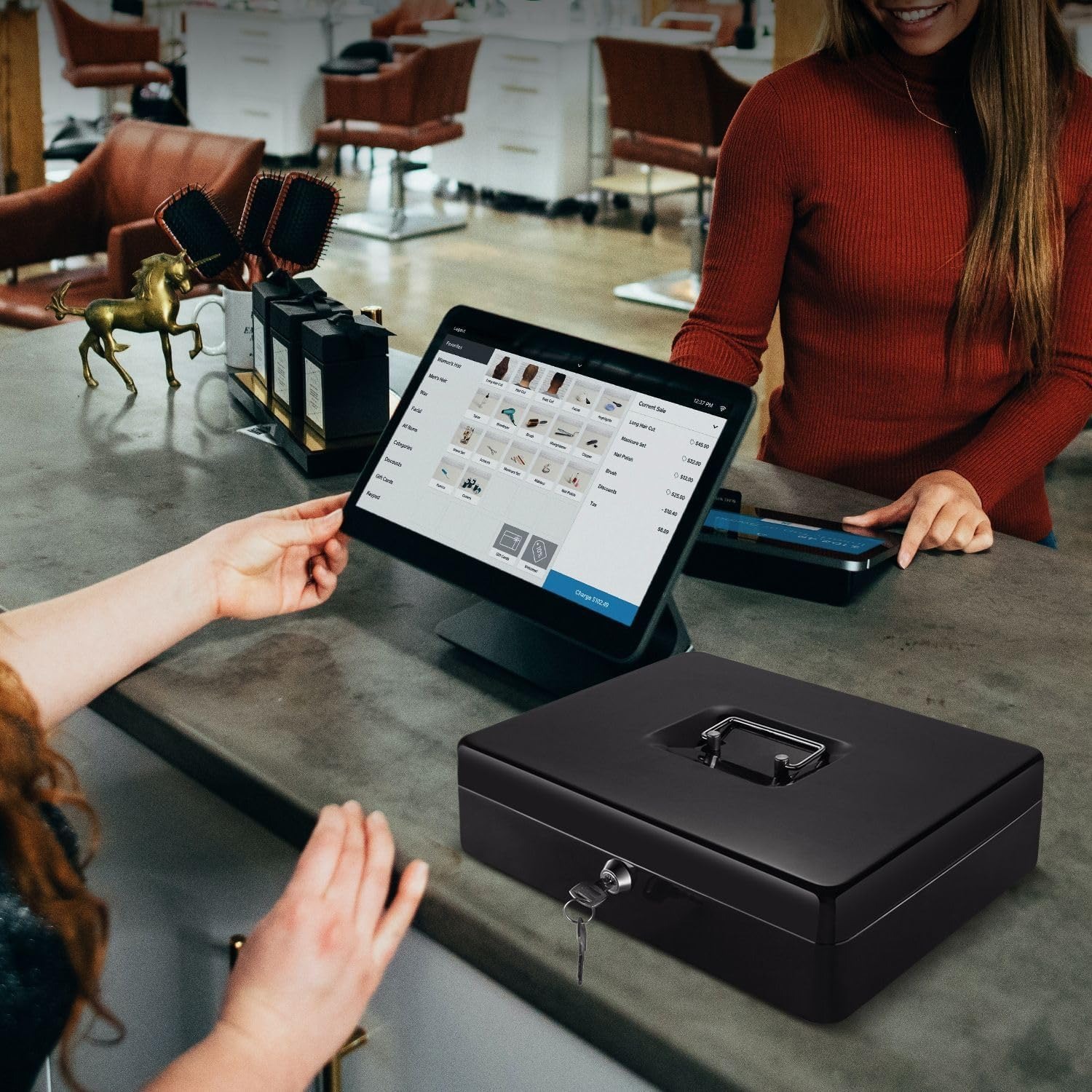
A cash box for market stalls needs to work within the space and pace of a small selling area. This box may suit a seller who wants separate places for change and a handle for moving the setup between supervised locations.
It may also serve as a petty cash box for a small office. The compartments can help keep cash apart from checks or receipts, though a separate ledger is still needed to explain payments and balances.
For school events and fundraisers, the main benefit is a shared layout. Volunteers can work more consistently when everyone knows where each denomination belongs. An adult organiser should manage access and arrange the handover at the end.
Allow for the weight of your float
The listed box weight is 1.44 kg before contents. Coins will add to that, sometimes more than expected. Consider the full journey from storage to your table, especially if it includes stairs or a walk from parking.
A folding handle is described, but that does not remove the need to assess a comfortable load. Before moving the box, close the lid and check that it is properly secured. Carry it with care rather than assuming the contents cannot shift.
If portability is your main reason for choosing a cash box with handle, think about how often you will move it. A box used twice during an event has a different role from one carried repeatedly throughout the day.
Set up a routine before the first payment
A useful change box starts with a known float. Count the opening cash and write down the total before serving anyone. Then assign the compartments and keep that arrangement consistent.
When several people share the task, explain the layout before the busy period begins. Agree where receipts go and who can remove money. Small choices like these help prevent confusion later.
Avoid letting unrelated items take over the cash space. Pens, personal keys, and scraps of paper can hide money or slow the count. Keep only what supports the payment task inside, and use another place for general supplies.
Plan for the end of the event
The busiest moment is not always when mistakes happen. Packing up can be rushed, particularly after a long fair or fundraiser. Decide where counting will take place before the event starts.
Compare the closing total with the opening float and recorded transactions. If two people are responsible for the money, a shared count can make the handover clearer. Record any difference while the details are still fresh.
After counting, move funds to the storage or deposit process appropriate to your situation. Leaving a portable cash storage box on a table or in an unattended vehicle is not a sound end-of-day plan.
Keep it dry and care for the lock
The maker states that this box is not water resistant. For outdoor use, choose a dry payment area and have a plan for changing weather. A covered stall can still be exposed to wind-driven rain or spilled drinks.
For routine cleaning, use a soft, dry cloth. Dry accidental moisture promptly and avoid letting liquid enter the lock. Do not soak the box.
If the key resists turning, stop and check whether the lid is sitting correctly or visible debris is causing trouble. Forcing the key can make a small problem worse. Seek product-specific advice before applying a cleaner or lubricant to the mechanism.
Questions worth settling before checkout
Some details are clear, including the listed overall size, weight, black colour, and alloy steel material. Other points need confirmation if they affect your decision.
Ask about the lock configuration, spare key availability, and tray layout where needed. No exact cash capacity is given, so avoid relying on an assumed number of notes or coins. A nine compartment cash box is a layout description, not a capacity guarantee.
Delivery timing, warranty terms, and return conditions also matter. Check the current our information for your destination. If you are buying for a dated event, allow time to inspect the box and practise your setup rather than planning around an unstated arrival date.
The short version
This locking cash box may suit everyday, supervised cash handling where separate compartments and portability are useful. The listed footprint is 22.9 × 30.5 × 7.6 cm, and the empty weight is 1.44 kg.
Choose it with a clear routine in mind. Check the fit, confirm the conflicting lock details, and keep it dry. For a stall, office float, or event table, thoughtful organisation matters as much as the box itself.