
The complete guide
Choosing a Document Organiser for Home, Work and Travel
Important papers have a habit of ending up in different places. A passport goes into a drawer, an insurance letter stays in its envelope, and a certificate slips between other files. Finding one item can turn into a search through the whole house.
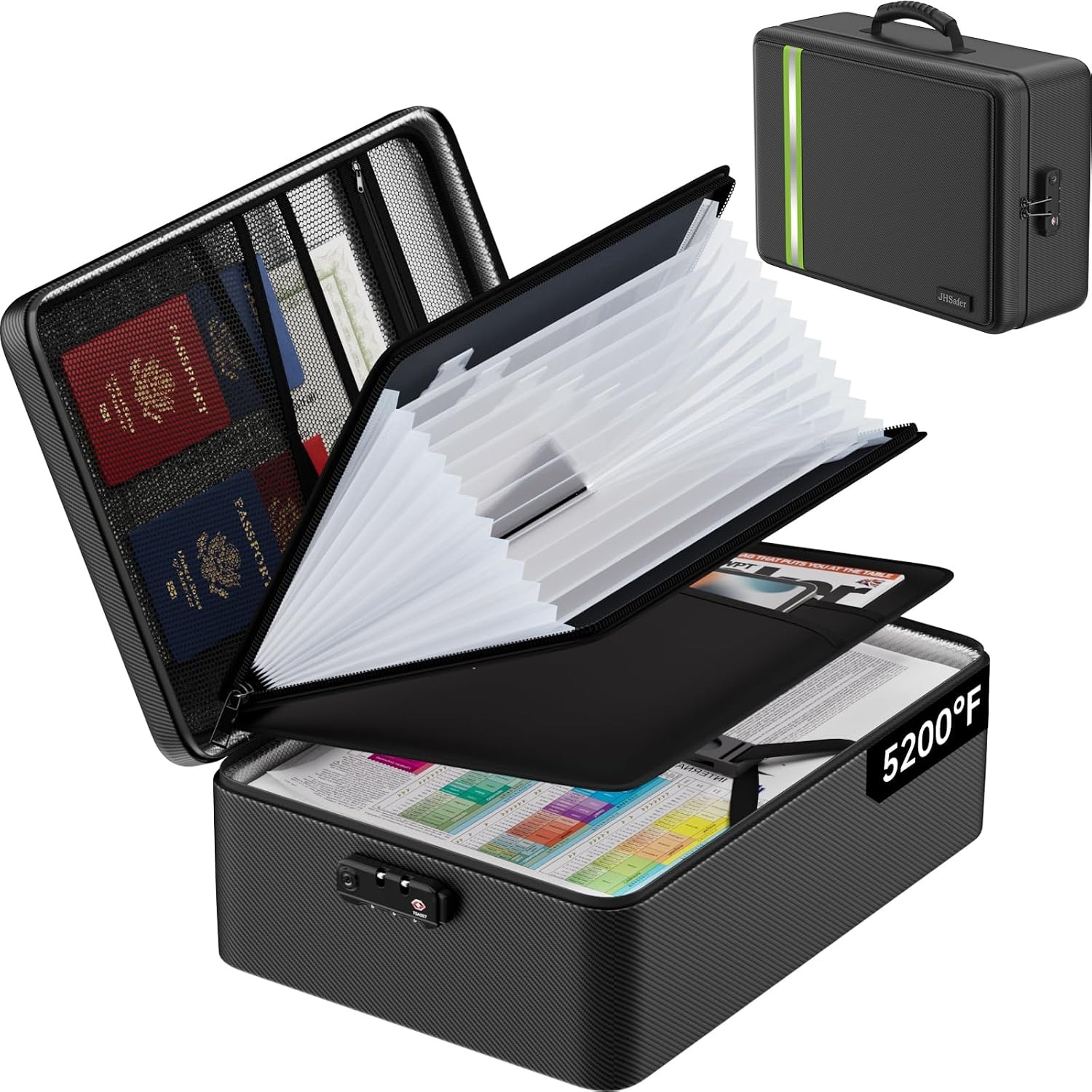
A document organiser gives those papers a shared home. This model combines 13 pockets with four storage levels, so you can separate records without keeping a pile of loose folders. Before you choose it, think about what you need to store, where the bag will live and how often you will carry it.
Start with the papers you actually need
The first step is not filling every pocket. It is deciding which papers deserve a place inside.
Gather the records that are difficult to replace or useful to find quickly. Depending on your household, that might include identity documents, insurance papers, certificates or property records. Keep only what you need, and follow any rules that apply to retaining original documents.
A household paperwork organiser works better when it has a clear purpose. If you mix important records with takeaway menus and old shopping receipts, the useful papers become harder to find. Everyday post may need its own folder elsewhere.
Lay your chosen documents on a table before buying. Their size and bulk will tell you more than a pocket count alone.
How the internal storage works
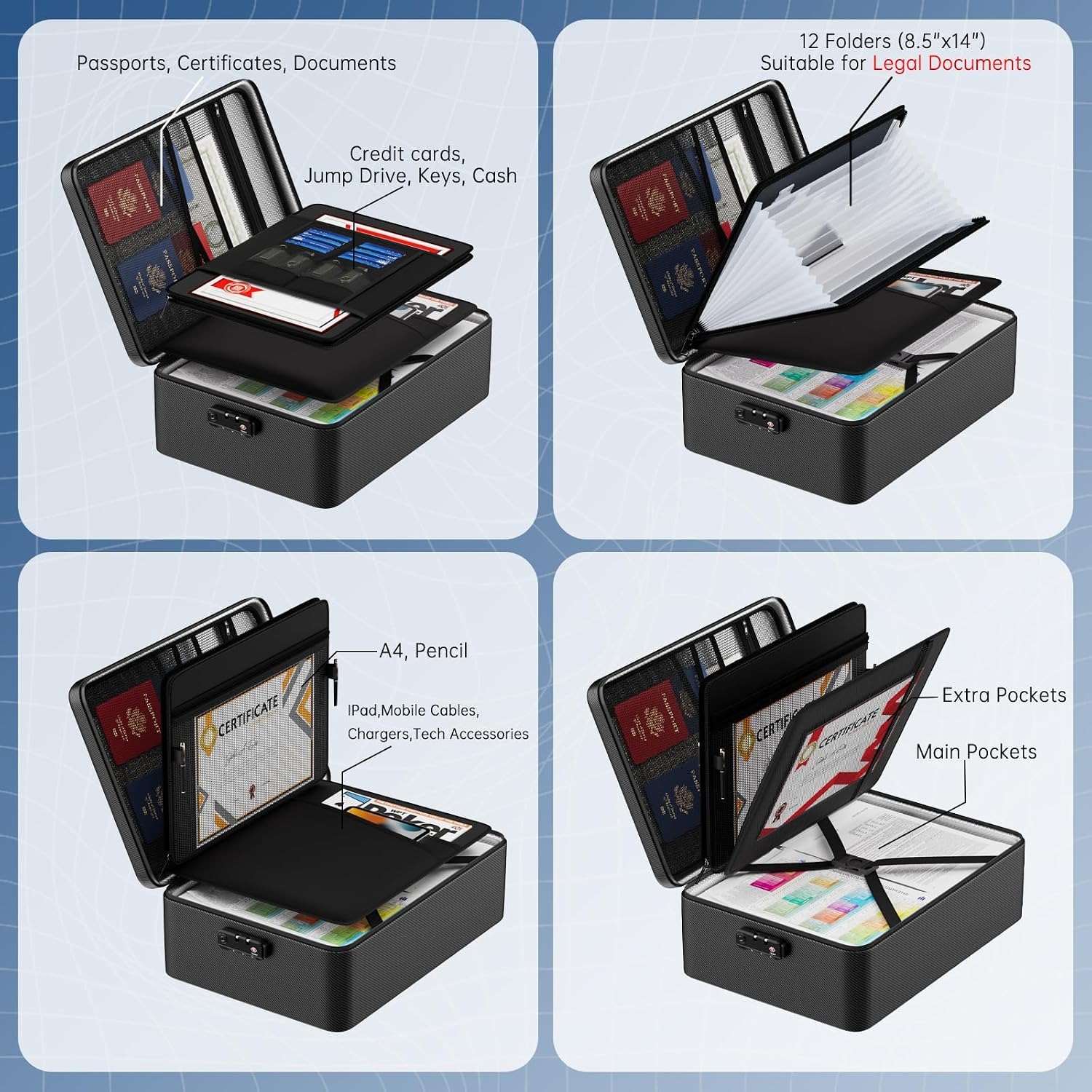
This organiser has 13 pockets and four storage levels. Those are different features, not a promise of 13 large compartments. The accordion document folder section separates papers, while the broader layout provides places for other listed items such as passports and small accessories.
The internal compartment uses a removable hook-and-loop design. That gives you some freedom to change the layout rather than working around one fixed arrangement. An internal retaining strap is also listed to help hold contents in place.
Think about access as well as capacity. Documents you use often should be easy to reach. Records you rarely need can sit farther back, provided you still know where they are.
Leave room to browse the sections. A file packed too tightly is awkward to use and may put strain on the pockets and closure.
Check paper fit, not just outer size
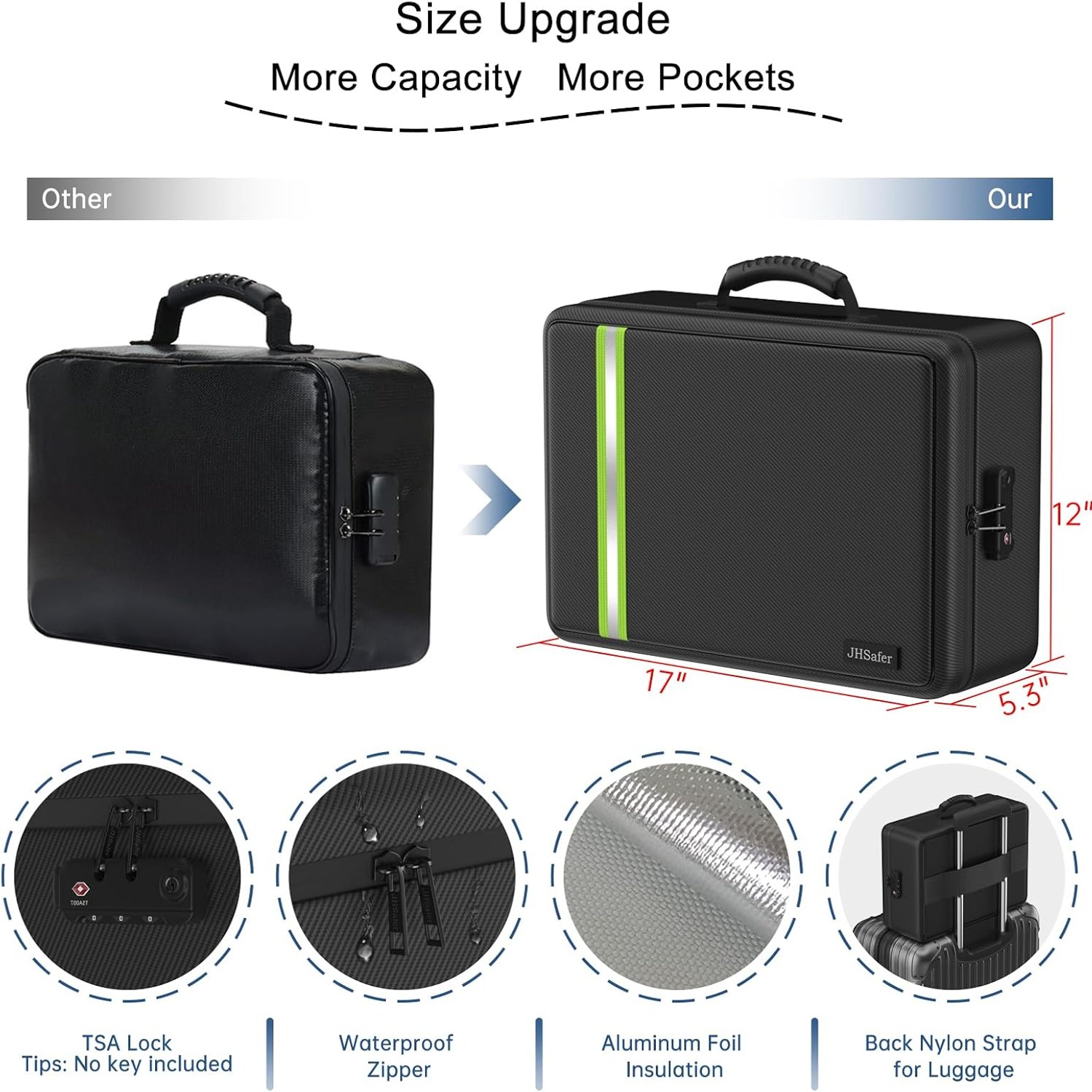
The overall dimensions are 43.18 x 29.97 x 13.46 cm. Use those measurements to check a shelf, cupboard or luggage space. They do not describe the usable size of each pocket.
A4 support is listed in the specifications. The description also names letter and legal documents, making this worth considering as an A4 file organiser or legal document organiser. Exact internal pocket measurements are not given by the maker.
That distinction matters if you use plastic sleeves, stiff presentation covers or oversized envelopes. An A4 page may fit where a thick A4 binder does not. Measure the complete item you intend to store, including any cover or tabs.
If a particular document must stay flat, confirm its fit before ordering. Do not plan on bending an original certificate just to make it fit.
Understand the protection claims
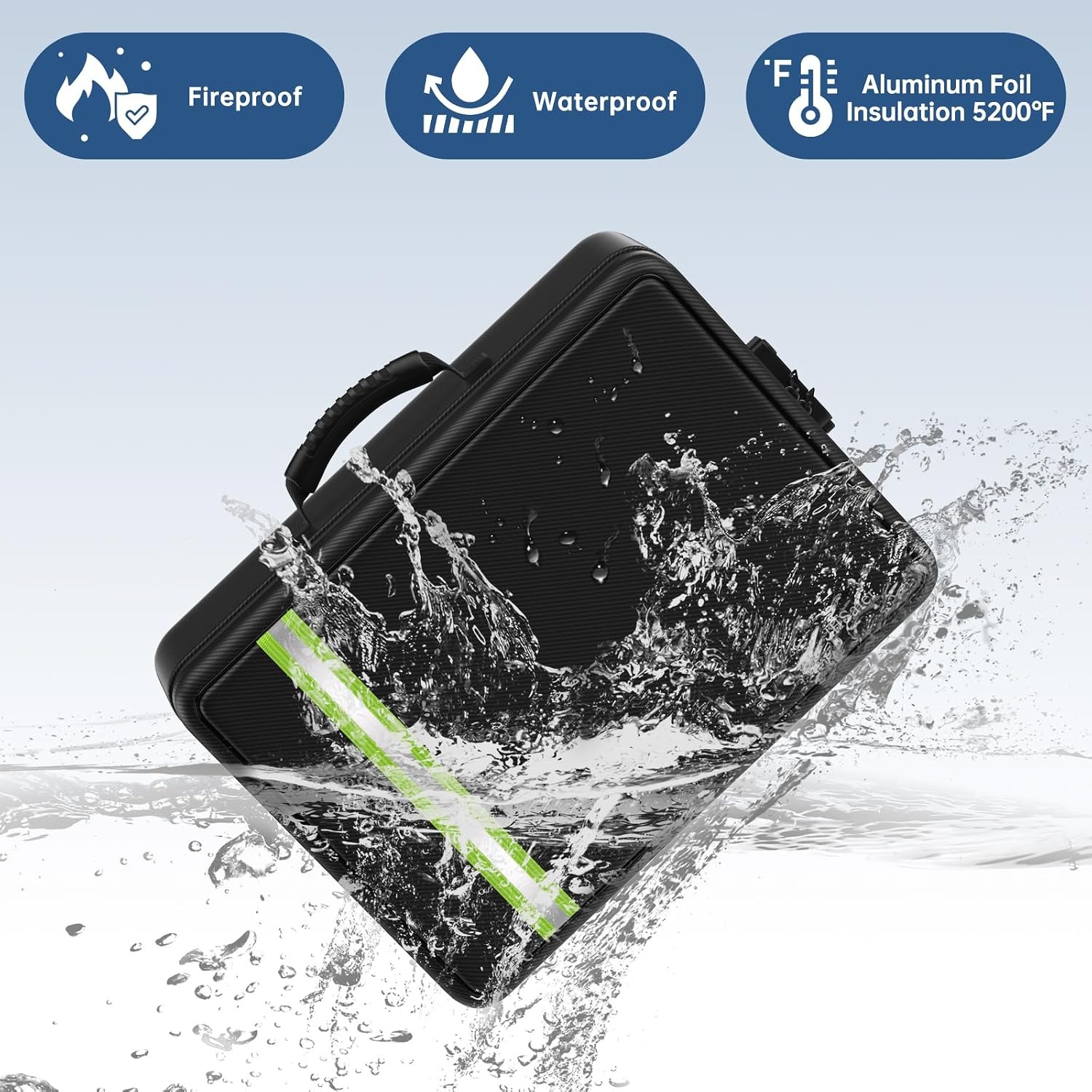
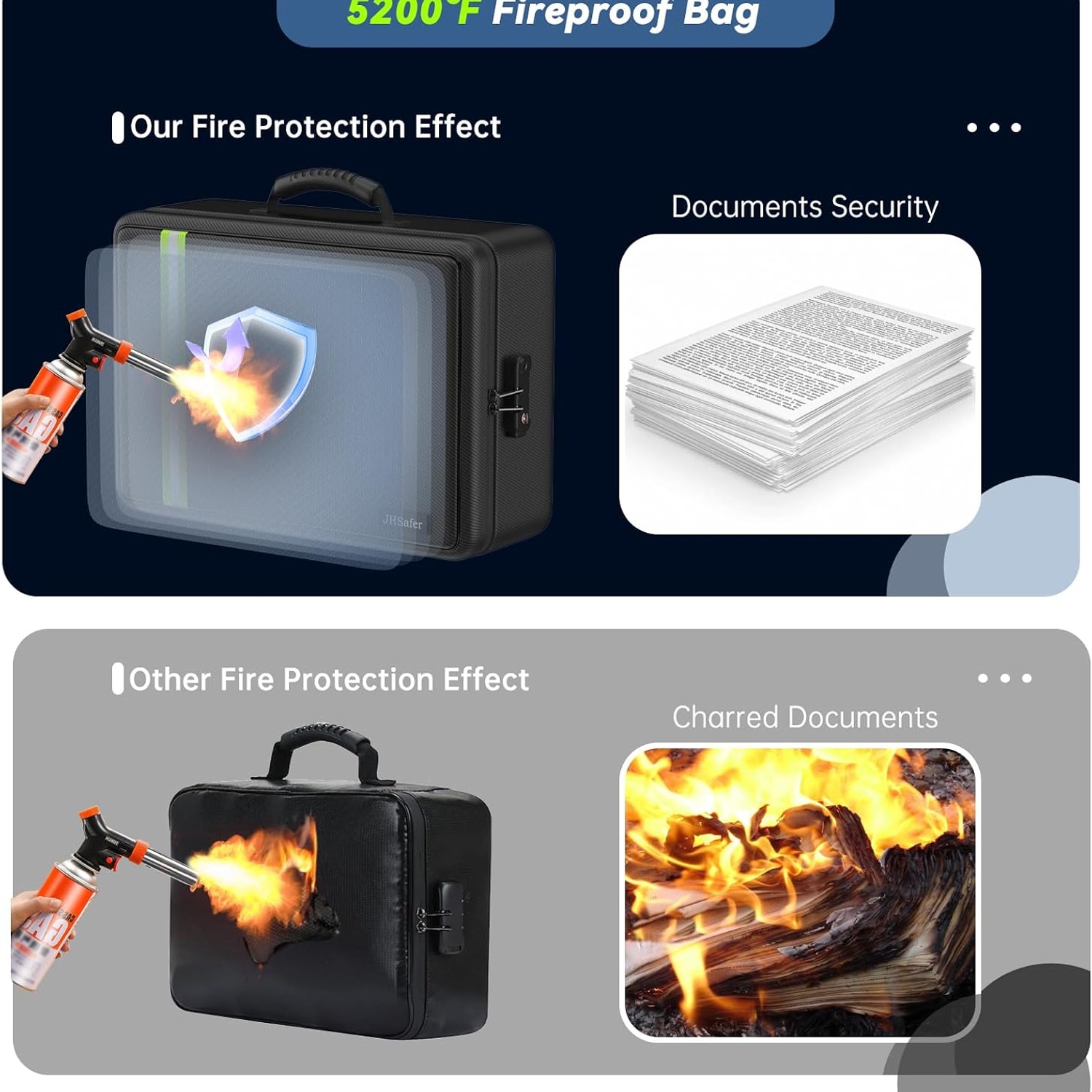
The listed construction is silicone-coated fiberglass with an aluminum foil interior. The product is described as fireproof, and the maker description also makes claims about protection from water.
Those descriptions need care. The maker does not provide an independently verified whole-product fire duration or water-ingress rating. It does not establish that documents will survive a particular fire, flood or period underwater.
Treat the organiser as a storage product with stated protective features, not a promise against every hazard. Do not test it with flame, heat or immersion. Such tests can damage the bag and put you at risk.
If your needs depend on a tested level of protection, ask for documentation that applies to the complete product. A material claim alone does not tell you how a filled bag will perform in a real incident.
What the combination lock can and cannot tell you
A three-digit combination lock is included in the listed features. This may be useful when you want a document bag with lock rather than a plain open folder.
It does not establish burglary resistance. The maker gives no security rating, and a portable bag can itself be moved. Keep that in mind when deciding where to store sensitive records or valuables.
Follow the lock instructions supplied with the product. Before putting important documents inside, practise opening and closing it while you can still reach the contents. Store any combination record somewhere separate and appropriate.
If you need protection against theft, assess that need on its own. A filing system and a rated security safe serve different purposes.
Who this organiser may suit
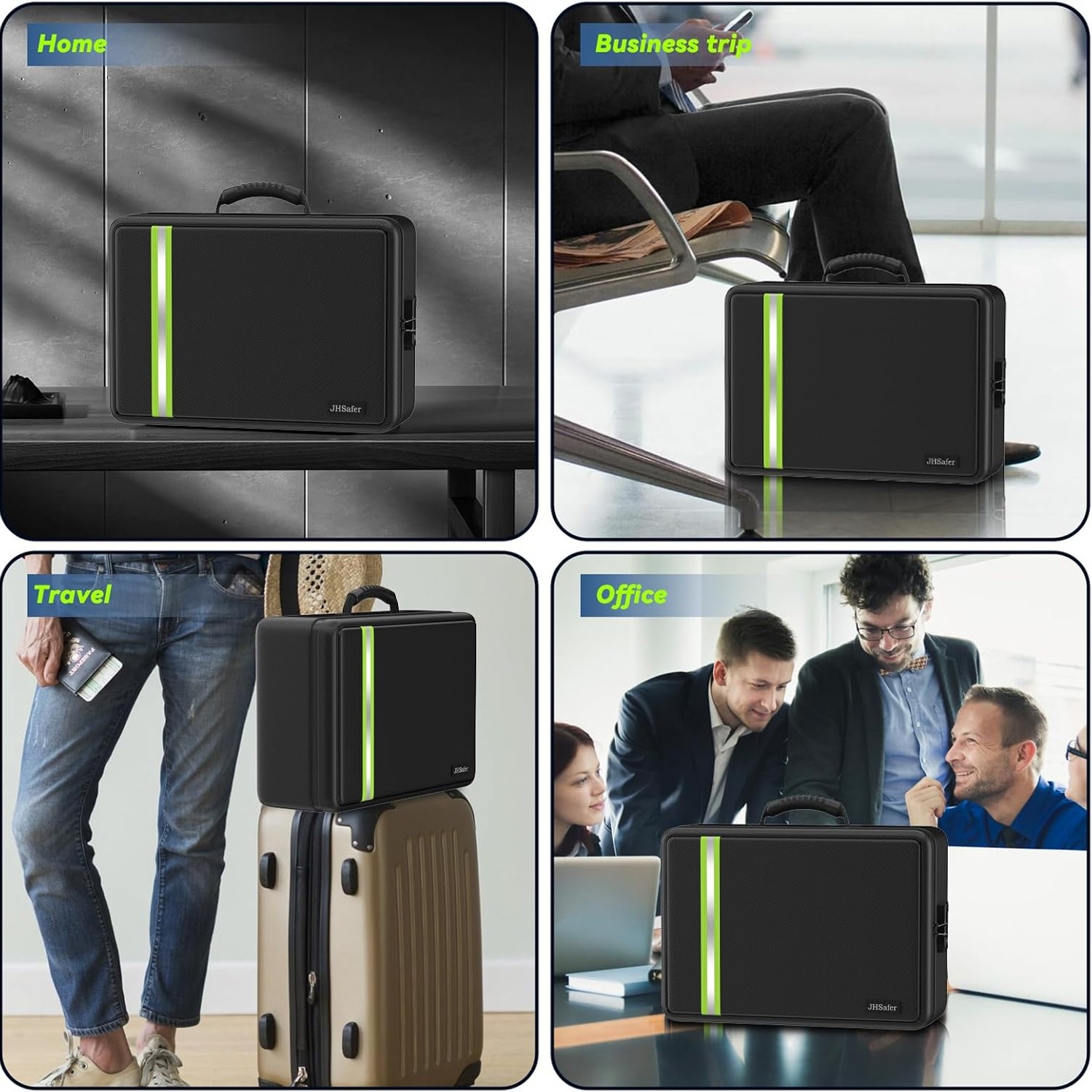
This layout may suit a household that wants its key papers together without using a separate box for every subject. A family document organiser can be divided by person, by document type or by both.
It may also suit someone who moves selected work papers between home and an office. Keeping a stable set of categories can reduce the need to repack everything for each trip.
For occasional travel, a passport storage organiser section can keep identity documents apart from larger papers. The description also lists space for chargers and electronic accessories, though there are no pocket-by-pocket size details.
It is less helpful to buy extra space without a plan. If you only need to carry a passport and a few tickets, consider whether this organiser's dimensions and weight suit that task.
Think about carrying weight
The listed weight is 1.57 kg before contents. A full load of paper, passports and accessories will weigh more.
Handles and a rear luggage trolley strap are included. These give you different ways to carry the organiser, but you should still check what feels comfortable for your journey. A short walk from a cupboard to a desk is different from carrying it across a large station.
If you plan to attach it to rolling luggage, check the fit with your trolley handle. The strap's exact dimensions are not specified by the maker.
Reflective strips are another listed feature. They can help the bag stand out when light reaches them, but they do not produce light. Keep your storage spot easy to access without depending on those strips alone.
Build a filing system you can keep using
A 13 pocket file organiser does not need 13 complicated rules. Start with a few categories that match how you look for things.
For example, you might keep identity documents together, separate insurance from property papers, and give medical records their own section. Add more categories only when they make finding something easier.
Use short, clear labels. Another household member should be able to understand them without asking what each abbreviation means. A simple contents list can help if several people use the same bag.
Place new documents in the right section when they arrive. Review the contents from time to time and remove records you no longer need to retain. This keeps the organiser useful rather than turning it into another crowded drawer.
Decide where it will live
A portable document box still needs a regular storage place. Choose somewhere dry and easy for the right people to access. Avoid spots where the bag will be crushed or where the closure catches on surrounding items.
If you plan to keep it inside an existing safe, measure the opening as well as the interior. A bag that fits the internal shelf may not pass easily through a narrower door.
Allow space around the organiser so you can lift it out without pulling on the zip or straps. You should also have enough room to open it comfortably when sorting papers.
For an emergency document bag, consistency matters. Let household members know where it belongs, but never make collecting it a reason to delay leaving an unsafe area.
Care for the bag and its contents
Keep papers dry before storing them. Avoid putting damp envelopes or recently wet items into a closed document storage bag.
For routine care, gently remove dust with a soft cloth. Detailed washing instructions are not given by the maker by the maker, so do not assume the organiser is machine washable or suitable for soaking.
Check the zip, seams and handles from time to time. If the closure resists, rearrange the contents instead of pulling harder. Keep hard-edged accessories from pressing into paper sections.
Store digital copies of suitable records separately where appropriate. Copies do not replace every original, but a second record can be useful if the original becomes unavailable.
The short version
Choose this organiser for its filing layout first. It offers 13 pockets, four storage levels, a removable internal compartment and carry features in a bag measuring 43.18 x 29.97 x 13.46 cm.
Check fit for your actual papers and remember its 1.57 kg starting weight. Treat fire, water and security claims with care because verified whole-product performance limits are not given by the maker by the maker.
The most useful organiser is one you can keep in order. Give each important paper a clear place, leave enough room to find it and return it there after use.