
The complete guide
Choosing a Compact Safe for Everyday Valuables
Small valuables have a way of spreading across a home. Cash ends up in one drawer, jewellery in another, and a passport disappears under paperwork just when you need it. A compact safe box gives those belongings a set place behind a lock.
Choosing one takes more than finding a box that fits on a shelf. You need to think about what will go inside, who needs access and whether the safe can be fixed in place. It also helps to know where the product information stops. This model lists a key lock and steel construction, but no tested fire or burglary rating.
Start with what you want to store
Put the items you plan to store together before choosing a safe. This is a simple step, but it can prevent a disappointing purchase. A few pieces of jewellery and folded notes need much less space than document folders or boxed watches.
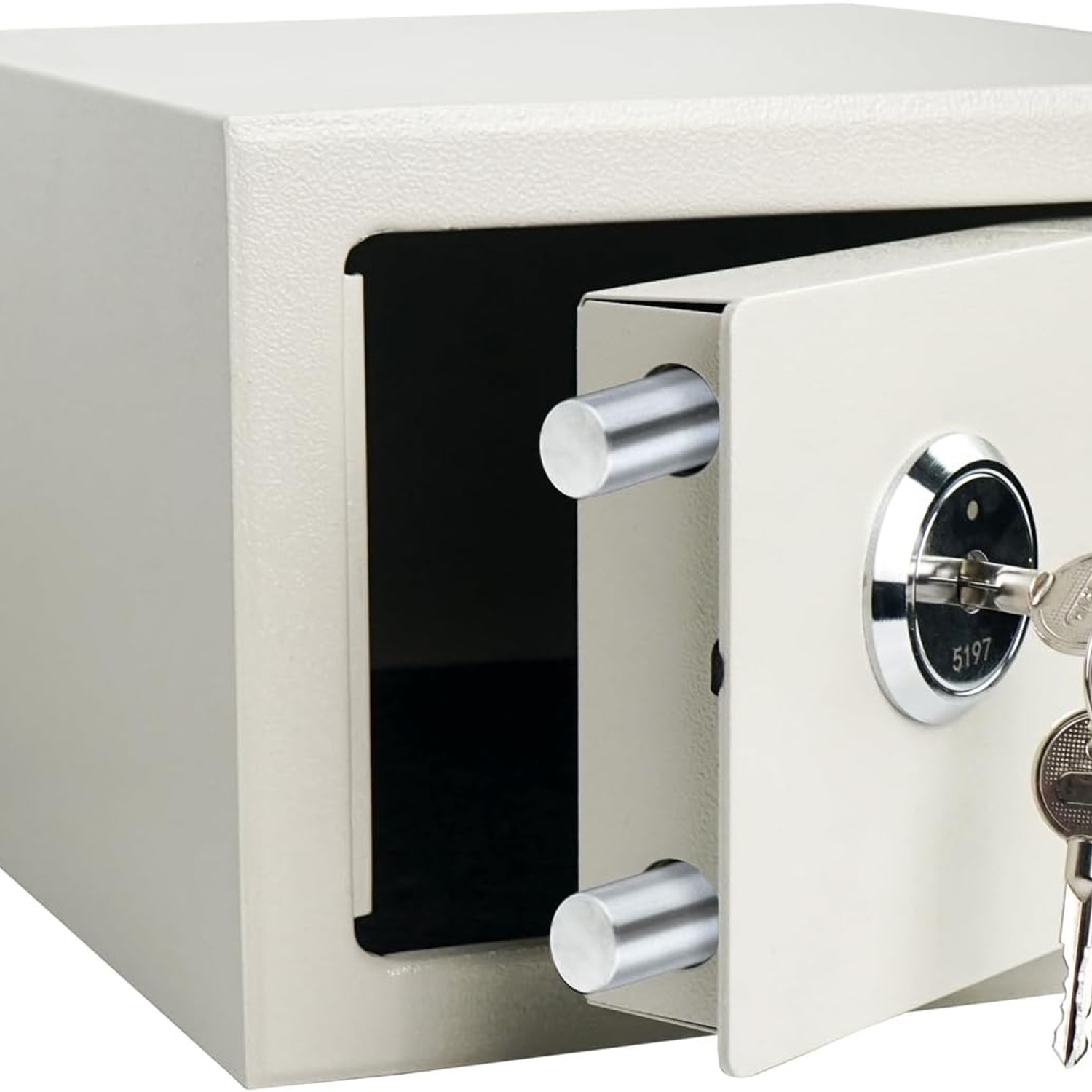
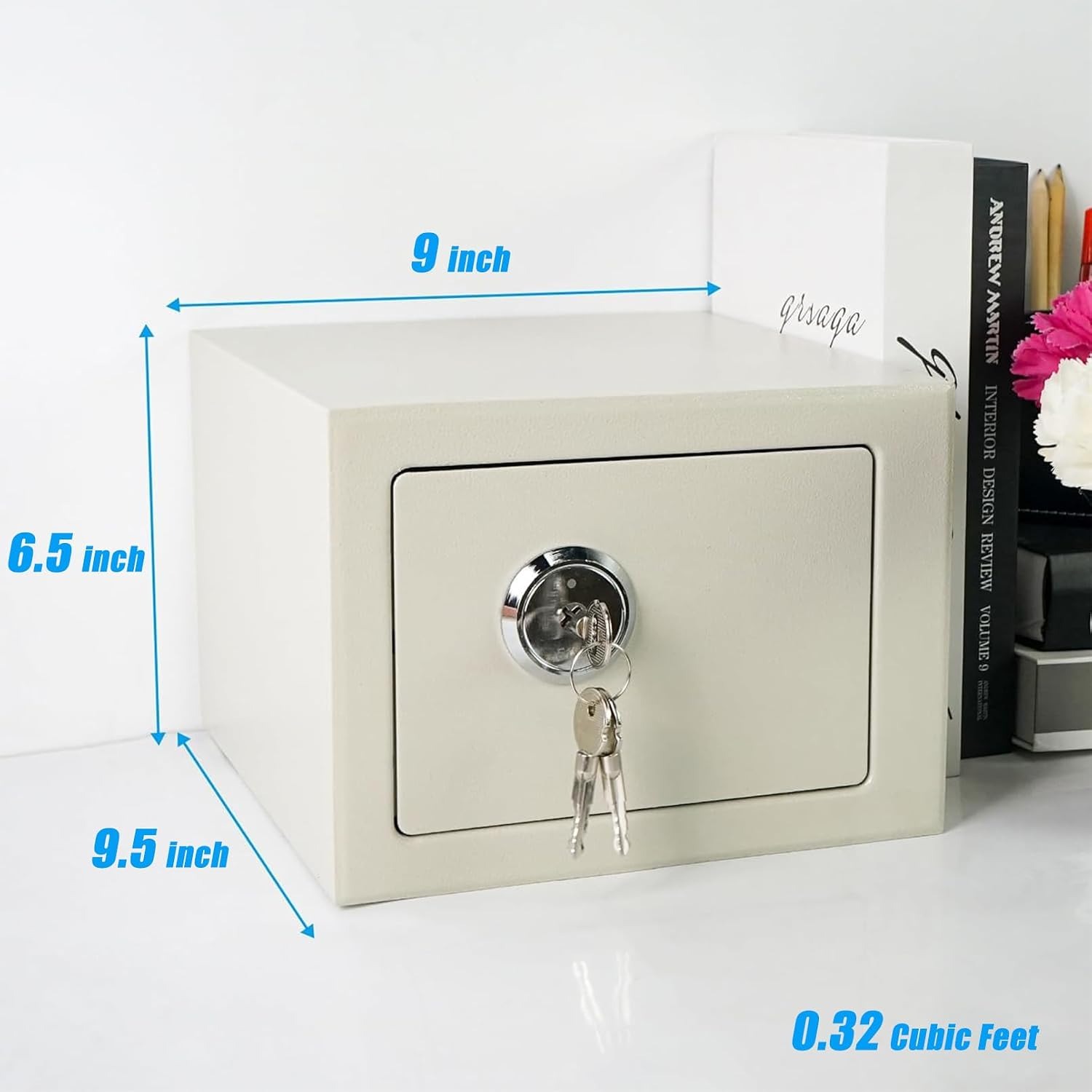
This small steel safe has a stated capacity of 0.32 cubic feet. The maker suggests it for cash, jewellery, passports and other small personal belongings. Think of it as storage for a selected group of items, rather than a place for every important object in the house.
Allow room for protective cases too. A watch may fit by itself but take up much more space in its box. Jewellery pouches, envelopes and document sleeves also affect how much you can store and how easily you can reach it.
Check the measurements before choosing a spot
The product details list dimensions of 22.9 x 22.9 x 15.2 cm. Mark out that space where you plan to put the safe. A paper template can help you see whether it will crowd a shelf or get in the way inside a cupboard.
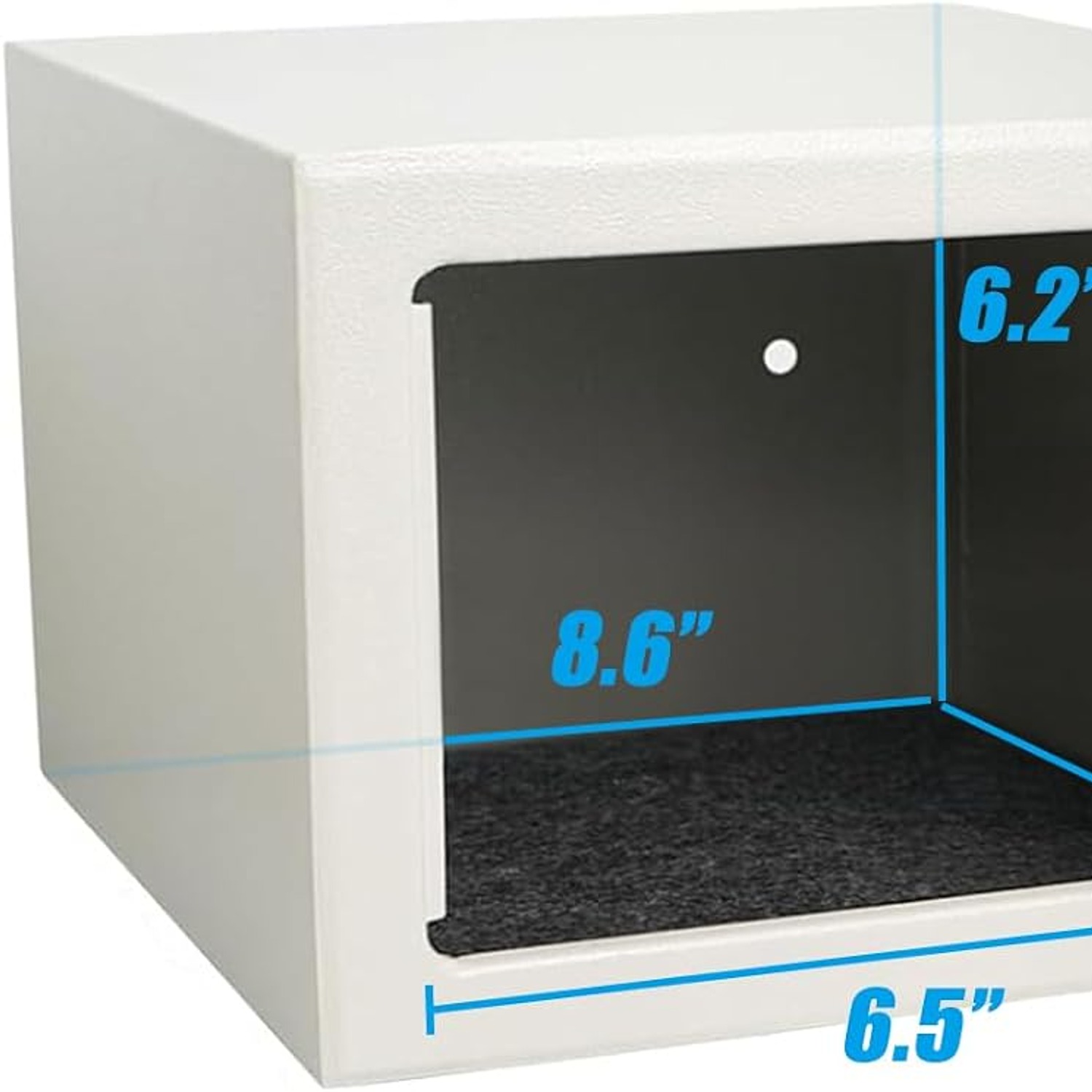
Those measurements do not tell you the usable interior size. The walls, door and lock take up room, and the door opening may restrict what passes through. Internal dimensions are not provided by the maker.
The maker text also includes a different set of approximate inch measurements. Use the listed metric product dimensions as your planning reference, and confirm any tight fit before purchase. Do not plan an installation with no spare room around the box.
Leave space to turn the key and open the door. A safe that fits inside a cabinet is not much use if the cabinet frame blocks access.
Understand the key lock
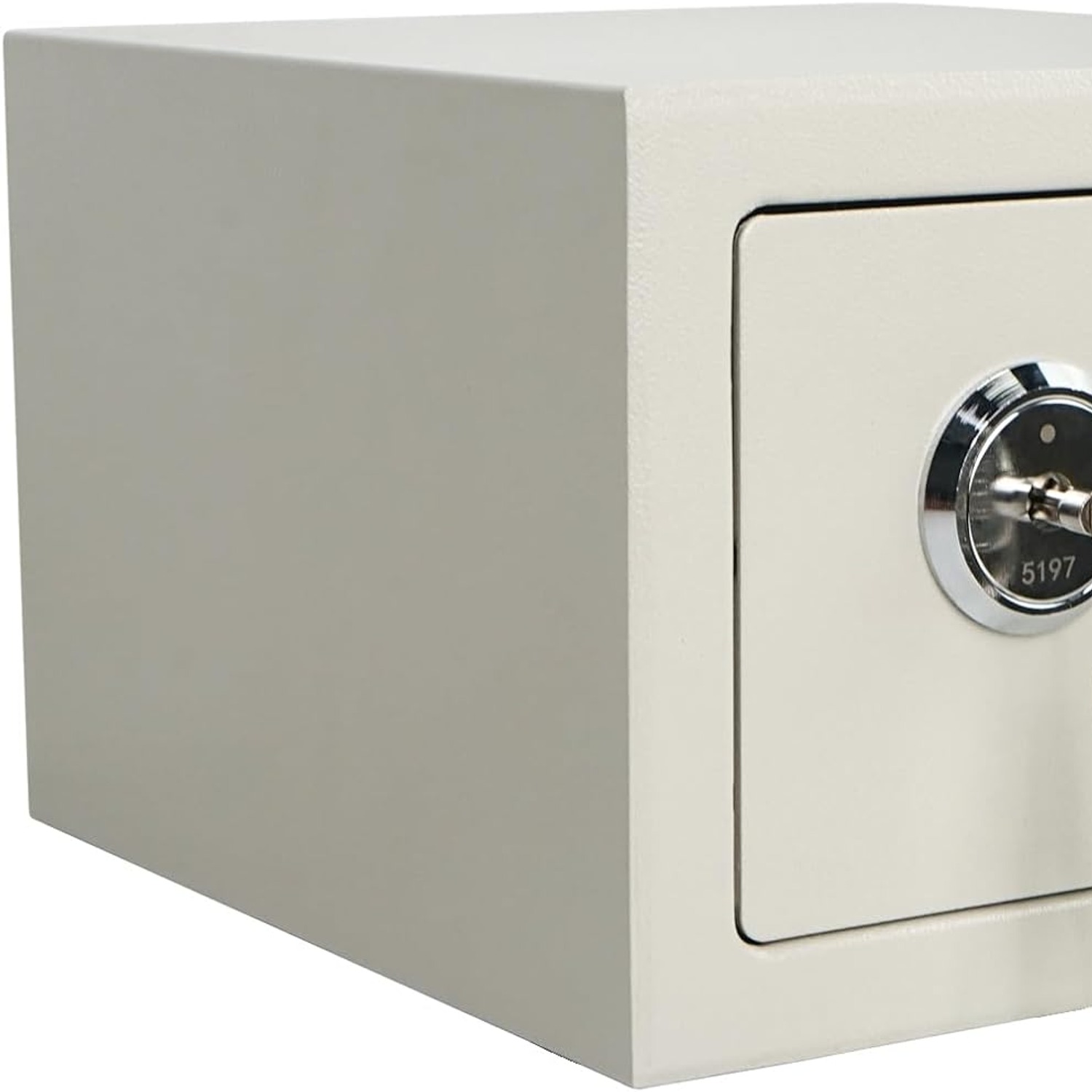
This is a key lock safe. You open and secure it with a physical key rather than entering a code. That can suit someone who prefers a familiar lock and does not want to manage keypad settings.
The maker describes two locking bolts and a steel door. These are useful construction details, but they do not tell you how long the safe would resist an attack. No tested resistance level is given.
Your key routine matters as much as daily convenience. Do not keep the key next to the safe or in an obvious nearby drawer. Decide who should have access and where the key will live before you start storing valuables.
The number of supplied keys is not stated. If shared access or a spare key is important, confirm that detail rather than assuming a particular quantity.
Know what steel construction does and does not mean
The specifications list alloy steel, while the maker describes a powder-coated exterior, recessed door and reinforced hinge arrangement. The finish is white, and soft lining is described inside.
These details help you understand the box's design. They are not a substitute for independent testing. No steel thickness, burglary certification or insurance approval is supplied.
The same caution applies to fire and water. A metal box is not automatically fireproof, and a closed door is not proof against flooding. If those hazards are your main concern, look for a product with a stated, relevant test rating.
For valuable collections or items covered by insurance, ask your insurer what storage standard is required. Do that before choosing a safe, not after installing one.
Decide whether to mount it
A small valuables safe should be considered as part of its surroundings. At a listed 3.13 kg, this box has weight, but weight alone does not stop someone from carrying it away.
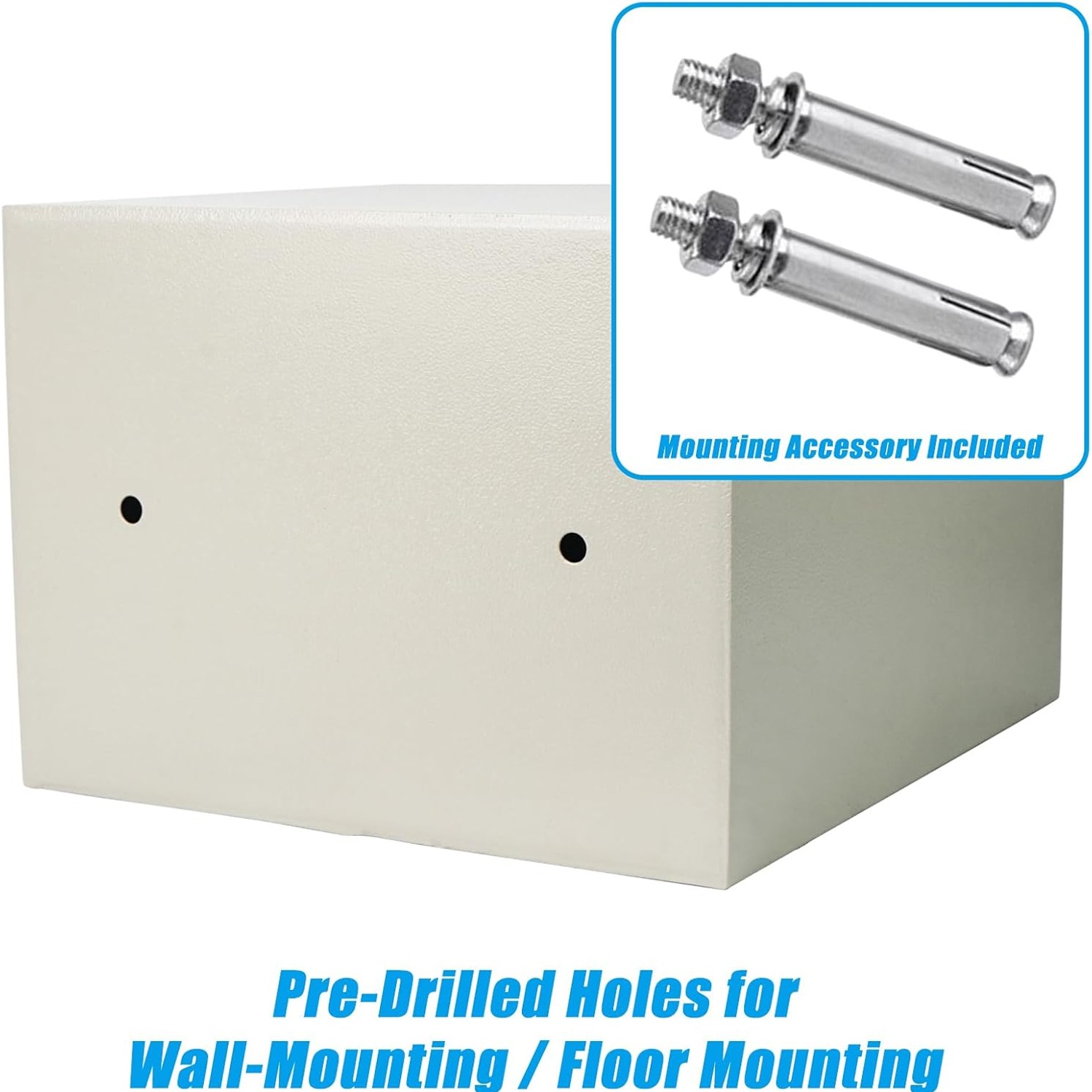
The maker describes pre-drilled holes and wall or floor mounting options. Fixing a safe to a suitable structure can help keep it in place. The result depends on the surface, fixings and installation, not simply on having holes in the box.
Check whether your chosen wall or floor can accept fixings. Also check for hidden pipes and wiring before drilling. If you rent, seek permission where needed.
Mounting bolts are mentioned in the maker description, but the included-components row lists only the safe. Confirm the hardware supplied and whether it suits your surface. Ask a qualified installer for advice if you are unsure.
Choose a place you can use comfortably
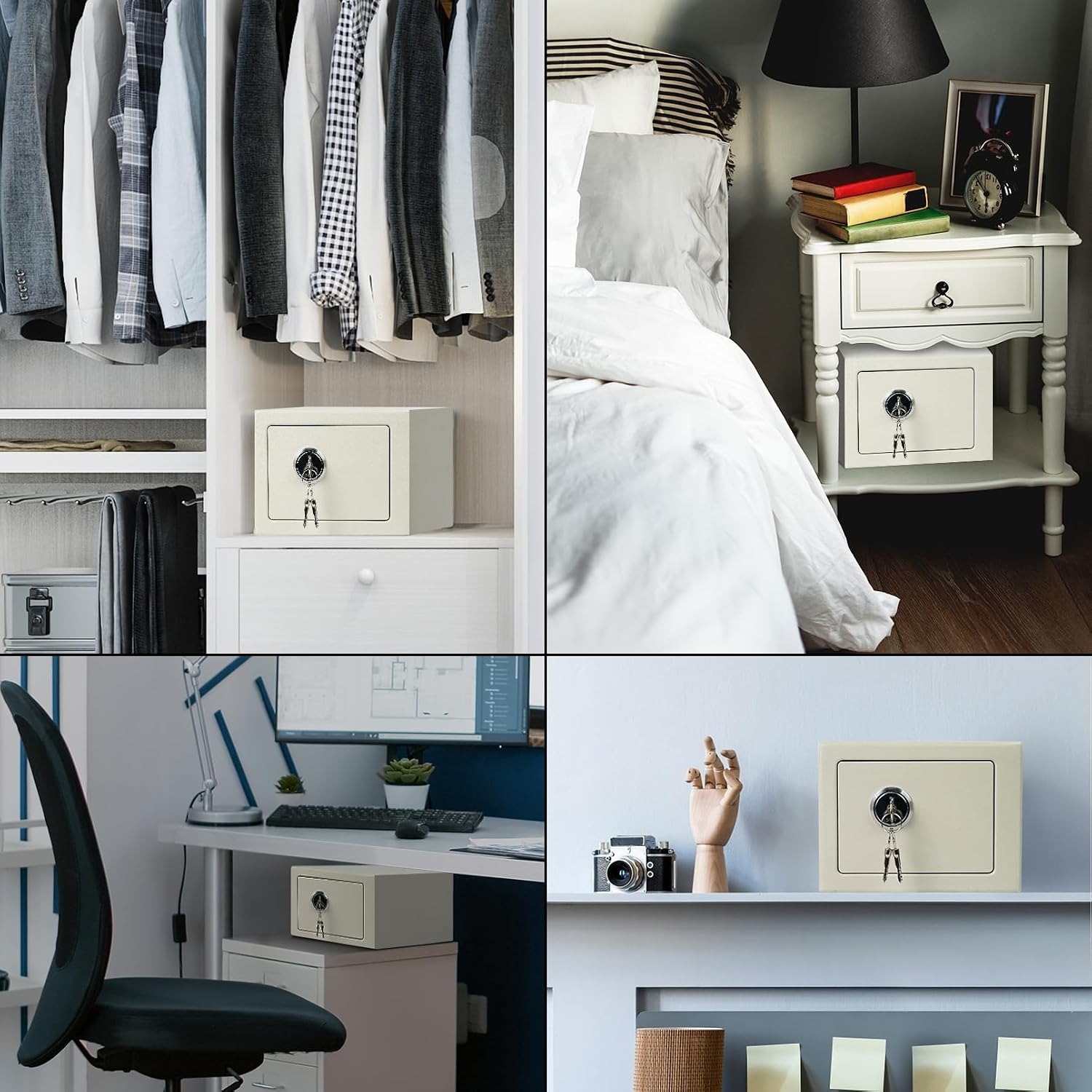
A compact home safe works best when its position suits your routine. If you use it often, you should be able to reach the lock without shifting furniture or kneeling in an awkward corner.
At the same time, avoid a position that puts the safe on display to every visitor. Think about sight lines from doorways and windows, along with who normally uses the room.
Keep the location dry. No water resistance rating is stated, so a damp floor, a spot beneath plumbing or an area prone to leaks is a poor choice.
Check the supporting furniture as well. It needs to hold the safe and its contents. If mounting through furniture is being considered, get advice on whether the furniture and fixing method offer a suitable anchor.
Organise the interior with care
A jewellery lock box is easier to use when each item has its own place. Small pouches can keep chains apart and reduce contact between pieces. The soft lining described for this safe does not replace individual protection for delicate finishes.
For cash, slim envelopes can help separate amounts without adding much bulk. Avoid filling the space so tightly that you must press items against the door to close it.
Documents need a little more thought. This is a compact box, and full-size papers may need folding. If you want to keep certificates or contracts flat, compare larger document safes with published internal measurements.
Leave enough room to remove one item without emptying everything else. Easy access helps you keep the contents orderly over time.
Match the safe to your household or office
This model is described for home and office use. It may suit someone who wants a small, key-controlled storage point for personal items rather than a large cabinet.
In a shared home, agree on who can use it and how access will work. In an office, think about whether personal key control fits your workplace rules. A small office safe is not automatically suitable for business cash handling or confidential records.
Take extra care with medicines or other restricted items. No child-resistance claim is provided. Follow the relevant storage instructions and do not treat the presence of a lock as proof that every safety requirement is met.
The maker gives no firearm-storage certification either. If that is your intended use, check local law and choose storage with the required evidence of compliance.
Keep care simple
Wipe the outside with a soft cloth and dry away moisture. Avoid abrasive pads or harsh cleaners that could damage the finish. Keep cleaning liquid away from the keyhole.
Use the key gently. If it becomes hard to turn, do not force it or add an unapproved product to the lock. Seek suitable service advice instead.
Check mounting points from time to time, particularly if the safe or surrounding furniture has been moved. Loose fixings should be assessed before you continue relying on the installation.
It is also worth reviewing the contents now and then. Remove items you no longer need to keep there and check that papers remain dry and easy to retrieve.
Review the missing details before ordering
Several useful details are not specified, including internal dimensions, door opening clearance, key quantity and a product-specific warranty. Delivery timing and return terms also need to be checked through our delivery and returns pages.
If one of those details decides whether the safe will work for you, ask before buying. This is especially important for exact-fit items, shared key access or installations that require drilling.
Keep the order information and inspect the safe before mounting it. If it does not suit your needs, check the return policy before making changes that could affect return eligibility.
The short version
This compact safe combines key access, a stated 0.32 cubic feet capacity and wall or floor mounting options. It is worth considering for a small set of everyday valuables when you want a dedicated lockable place.
Measure your items, plan the location and confirm the unknown details first. Choose rated storage instead if your needs include proven fire protection, water resistance or a specific security standard.